Education
Tarot vs. Astrology: Which Reading Type Answers Your Question Best
By Maren Sokolov · Published August 5, 2026· 5 min read
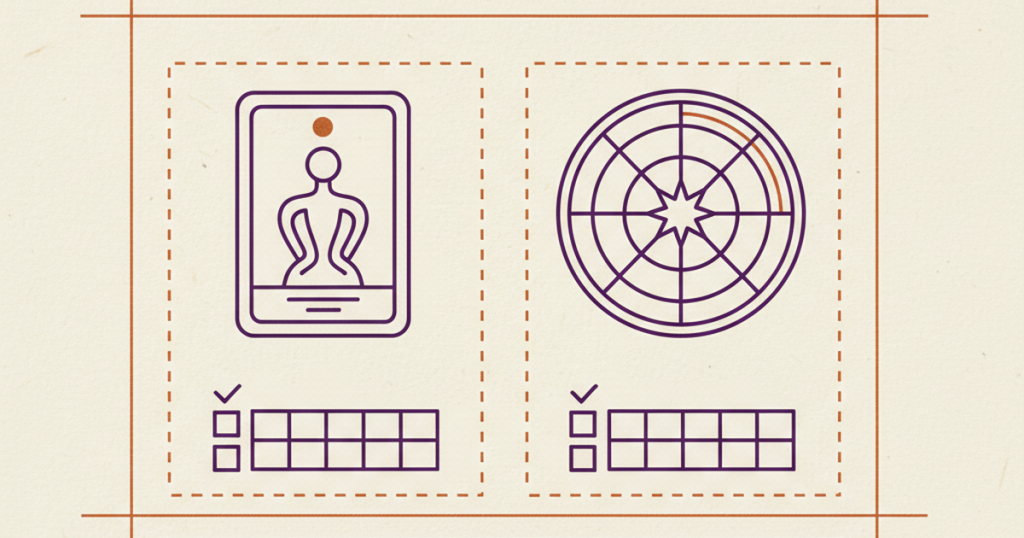
Tarot and astrology get lumped together constantly, but they work from completely different starting points, and picking the wrong one for your question is a common reason a reading feels unsatisfying even when the reader is engaged and skilled.
Tarot: Card-Driven and Flexible
A tarot reading uses a deck of illustrated cards, drawn and laid out in a pattern called a spread, as a structured prompt for the reader’s interpretation. The cards themselves don’t come with fixed, single meanings — a reader interprets each card in the context of its position in the spread and the question you brought to the session. That flexibility is tarot’s core strength: it adapts naturally to an open-ended question about a current situation, a decision you’re weighing, or a pattern you’re trying to understand, because the spread can be shaped around whatever you’re actually asking.
That same flexibility is a weaker fit for yes/no predictions or precise timing questions. A tarot spread can point toward a general direction or highlight factors at play in a situation, but it isn’t built to produce a specific date or a binary answer with any real precision, and a reader who claims otherwise is stretching the format past what it’s designed to do.
Astrology: Chart-Driven and More Structured
An astrology reading is built from your birth date, time, and location, mapped against planetary positions at that moment to construct a natal chart. This makes it considerably more structured and less improvisational than tarot — the chart is a fixed data set, not something drawn fresh each session, so a competent reading should be traceable back to specific chart placements rather than general personality description.
This structure makes astrology a better fit for questions about timing and recurring patterns — when a particular kind of period tends to arrive, or why a certain theme keeps resurfacing across your life. A legitimate astrology reading should be able to name which specific placement in your chart is driving a given piece of guidance, not just describe broad personality traits that could plausibly apply to a wide range of people.
Where They Overlap
Both formats ultimately deliver guidance through a reader’s interpretation of a structured prompt, and both can address relationship and career questions reasonably well, since neither is inherently limited to a single subject area. Both also depend heavily on the reader’s actual skill at connecting the prompt — cards or chart — to your specific situation, rather than reciting generic meanings that would apply to nearly anyone.
Where They Diverge
The clearest divergence is precision versus flexibility. Astrology works from a fixed, calculable data set, which makes it better suited to questions with a timing component — when something is likely to shift, or why a recurring pattern shows up on a cycle. Tarot works from a fresh draw each session, which makes it better suited to an open-ended question about a present situation with no fixed timeline attached. Asking a tarot reader for a precise date, or asking an astrology reader an entirely open-ended “what should I do” question with no context, tends to produce a weaker session than matching the format to the kind of question it’s actually built to answer.
What a Legitimate Session Should Walk You Through
In a tarot reading, expect the reader to name each card as it’s drawn, place it within the spread’s structure, and connect its meaning specifically to the question you brought — not just recite a generic dictionary definition of the card in isolation. A reading that never references your actual question after the cards are drawn is a weaker session regardless of which cards came up.
In an astrology reading, expect the reader to reference specific placements — a particular planet, house, or aspect — when explaining a piece of guidance, rather than describing your personality in broad strokes that could apply to a large share of people born around the same time of year. If a reader can’t point to a specific chart element behind a given statement when asked directly, that’s worth noticing.
A Practical Way to Decide
If you’re not sure which format fits, try writing your actual question down in one sentence before booking either one. A question phrased as “what should I do about X” or “help me understand this situation” tends to point toward tarot. A question phrased as “when will X happen” or “why does this pattern keep repeating” tends to point toward astrology. Questions that don’t fit neatly into either phrasing — most relationship and career questions land here — can generally be handled reasonably well by either format, so the deciding factor becomes which style of session you find more useful to sit through, not which one is objectively correct for the topic.
Which One Actually Fits Your Question
If your question is open-ended and about a current situation — “how do I think about this decision I’m facing” — tarot’s flexibility is generally the better fit. If your question is about timing or a recurring pattern — “why does this keep happening” or “is this a good period to make a change” — astrology’s structure tends to answer it more directly. Neither format is inherently more legitimate than the other; they’re built to answer different kinds of questions, and matching the format to the question is most of what determines whether a session feels useful afterward.
For a full breakdown of these two formats alongside mediumship, dream interpretation, and relationship and career readings, see our complete guide to reading types. And if you’re deciding which platform to book either format through, our full rankings cover what each platform publishes about pricing and reader vetting across the formats it offers.